I do not scream. I document.
That distinction matters more than most people understand.
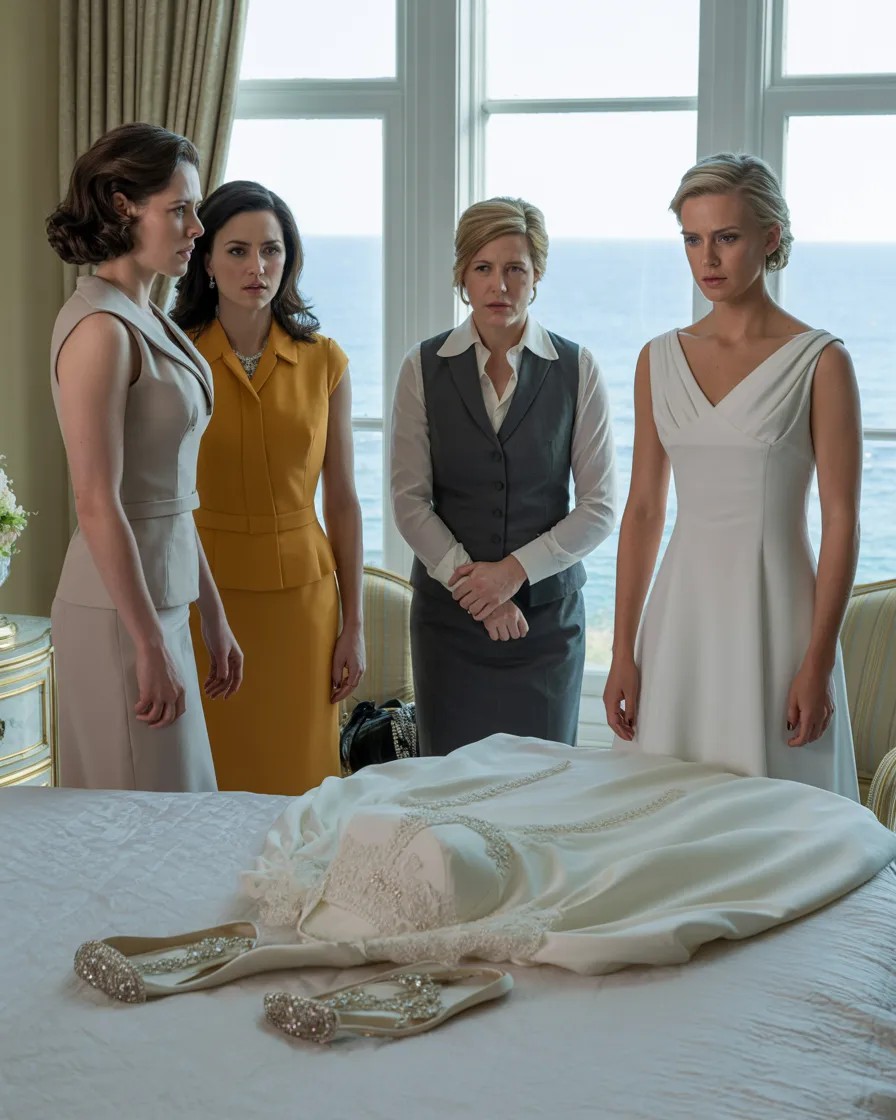
My name is Lorie LeChance Beaumont, and I am thirty-one years old. Six months ago, my younger sister cut my wedding dress into pieces the night before my ceremony while my mother stood in the doorway watching it happen with the emotional urgency of someone observing rain hit a window. When I finally looked at her, stunned beyond anger, she sighed softly and told me not to be dramatic.
Not furious.
Not devastated.
Not humiliated.
Dramatic.
That word has followed me my entire life whenever I reacted appropriately to something inappropriate.
But I was not dramatic that night.
I was documentary.
There is a difference.
If you work in insurance long enough, especially high-value claims and fraud investigation, you stop believing most disasters happen cleanly. You stop accepting coincidence at face value. Eventually, you begin understanding that human beings leave patterns everywhere. Damage tells stories. Missing objects tell stories. Silences tell stories.
A house fire rarely begins where people insist it did.
A marriage rarely collapses over the argument everyone points to publicly.
And families—families are the most sophisticated fraud systems of all.
You learn to walk into a room the same way a forensic accountant opens a ledger. You look for inconsistencies. Emotional accounting errors. Tiny revisions buried beneath years of repetition. You learn that people can rewrite reality so many times they begin treating the rewritten version as fact.
My family had been rewriting me for twenty-nine years.
I simply had not started keeping records until that November.
The LeChance name in Rhode Island carries the kind of old-money restraint people mistake for dignity. Not billionaire wealth. Worse. Generational respectability. Three generations rooted between Bristol and Newport, French Canadian bloodlines folded carefully into old New England stone and traditions nobody explicitly explains because everyone inside them is expected to already understand the rules.
Appear polished.
Protect the family.
Punish quietly.
My grandmother, Meline LeChance, still lives in the Bristol colonial my grandfather Arthur Senior purchased in 1961, back when a waterfront property was considered ambitious instead of untouchable. The house smells permanently of cedar drawers, old books, and lemon polish. Even now, every room feels arranged around ghosts nobody mentions directly.
My father, Arthur Junior, died in 2018 after a stroke at fifty-eight.
People described him as reserved at the funeral.
What they meant was tired.
There is a specific exhaustion that settles into men who spend decades trying to keep peace between women who feed on imbalance. My father specialized in avoidance. He moved through conflict the way some people move around broken glass: carefully enough to avoid bleeding, never carefully enough to stop anyone else from bleeding instead.
After he died, the family structure did not collapse.
It clarified.
My mother Catherine had spent twenty-two years as headmistress of a prestigious private school in Barrington before retiring early. Officially, she said she wanted rest. Unofficially, retirement simply gave her more time to devote herself fully to her true profession:
Deciding which daughter deserved warmth that day.
It was almost never me.
Brooke, my younger sister by three years, has always existed at the center of my mother’s emotional universe. Brooke could fail classes, max out credit cards, disappear for weekends without explanation, and still return home wrapped in concern and forgiveness like expensive cashmere.
I, meanwhile, could arrive with promotions, paid bills, stability, and loyalty and still somehow leave conversations feeling vaguely accused of something invisible.
Brooke was sunlight.
I was weather.
Necessary sometimes, tolerated often, appreciated almost never.
The imbalance began so early I cannot identify its true origin anymore. By childhood, it already felt permanent. At ten, Brooke broke a neighbor’s window and cried until my mother insisted we should all be more careful about “making her feel attacked.” At thirteen, Brooke stole money from my purse and somehow I ended up apologizing for leaving temptation visible.
The system functioned because everyone inside it accepted the assigned roles.
Golden child.
Difficult child.
Protector.
Excuser.
Every family develops mythology eventually.
Ours simply disguised cruelty as temperament.
When I was sixteen, my grandmother gave me a pair of pearl earrings inherited from her own mother. Tiny Victorian pieces with delicate silver settings, fragile enough that I rarely wore them. My grandmother fastened them into my hands like she was transferring something heavier than jewelry.
“Some things belong to women who survive,” she told me quietly.
Brooke borrowed them at nineteen.
At twenty, she claimed she lost them.
My mother immediately shifted into damage control—not for me, but for Brooke. I still remember standing in the kitchen while Brooke cried loudly enough to dominate the room and my mother turned toward me with exhausted irritation.
“For God’s sake, Lorie, stop making her feel worse.”
As though grief itself were aggression.
As though losing something precious somehow became my failure for caring about it.
I let it go publicly.
Privately, I documented it.
That is another thing you should understand about me: silence is not the same thing as surrender. Some people mistake restraint for blindness because they cannot imagine anyone choosing observation over confrontation.
But observation has advantages.
You notice patterns.
Like the fact that Brooke wore those exact pearl earrings to my rehearsal dinner eleven years later.
I noticed immediately.
The second she walked through the restaurant doors laughing too loudly beside my mother, candlelight caught the pearls against her neck and memory slid perfectly into place. She had not lost them. She had simply decided they belonged to her more than they belonged to me.
And my mother had helped rewrite the story until even the theft itself became socially inconvenient to mention.
I said nothing.
Not because I missed it.
Not because I forgave it.
Because by then I understood timing matters more than emotion.
That is the first real thing you should know about me:
I notice everything.
And I say almost nothing until the moment speaking also becomes evidence.