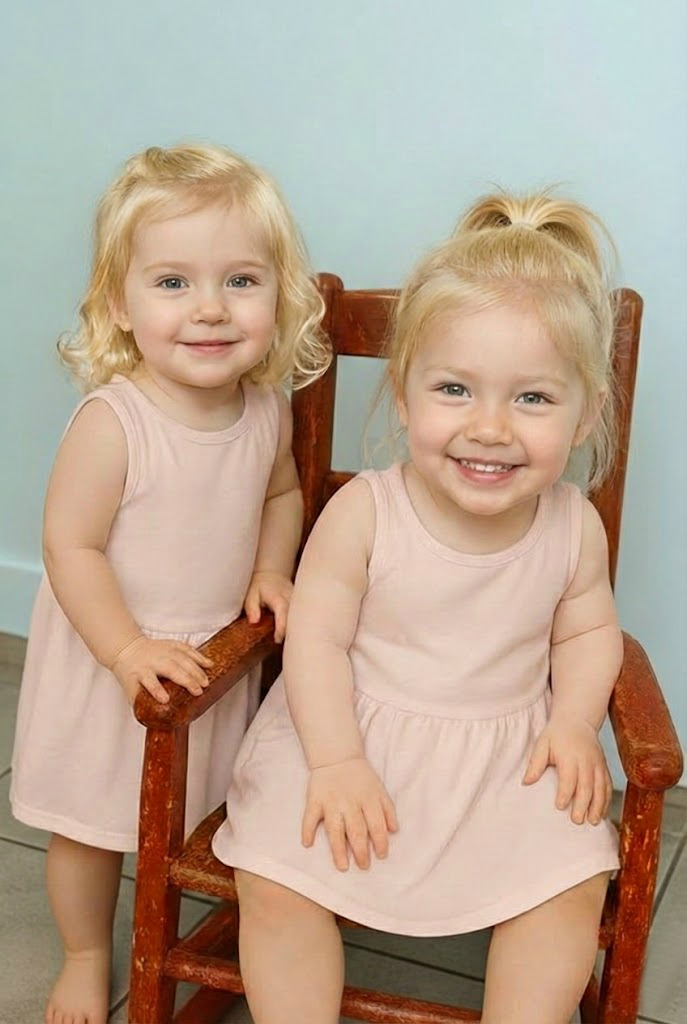
She didn’t think. She ran. Two tiny bodies pressed against her chest, lungs fighting desperately for air, eyes beginning to lose focus with every terrifying second. The firefighters inside the station looked up expecting another ordinary interruption to an otherwise quiet shift. But the moment they saw her face — pale, panicked, completely shattered — everything changed. Their expressions snapped from routine calm to raw, unfiltered alarm. Sirens erupted almost instantly. Oxygen tanks were pulled free. Radios crackled with urgent calls to medics. Hands moved faster than thought. No one yet understood why the babies were fading so quickly, only that time had suddenly become something sharp and merciless.
The mother barely remembered crossing the street toward the station. Later, she would describe the moment as instinct taking over where reason failed. One minute the babies had been restless and crying. The next, their breathing changed in a way every parent fears but cannot fully explain. Their tiny chests struggled harder with every breath. Their skin began losing color. Panic spread through her body so violently she could hardly hear her own thoughts. There had been no time to wait for certainty, no time to calmly call for help and explain symptoms. Something inside her simply screamed: move now.
When she burst through the station doors barefoot and shaking, clutching both infants in her arms, the room fell into immediate chaos. One firefighter grabbed oxygen while another radioed emergency responders. A third checked pulses with trembling urgency, realizing how frighteningly weak they had become. Training took over, but beneath the practiced movements was something deeply human — fear. Not fear for themselves, but fear of arriving seconds too late. The babies’ breaths came shallow and uneven, their small bodies frighteningly limp between moments of movement. Even experienced responders later admitted the sight stayed with them long after the ambulance doors closed.
Outside, sirens split through traffic as paramedics raced the children toward the hospital. Inside the ambulance, medics fought minute by minute to stabilize them, adjusting oxygen, monitoring heart rates, watching desperately for signs that their bodies were responding. The mother sat frozen beside them, caught between prayer and disbelief. Just hours earlier, the day had felt completely normal. There had been laughter, feeding bottles, blankets scattered across the couch — ordinary moments no different from countless others. Now every second felt suspended between life and death.
In the days after, the firefighters kept replaying the moment in their minds. Around coffee tables and during quiet overnight shifts, they spoke softly about how close it had truly been. Some admitted they had already prepared themselves emotionally for the possibility of losing both children before reaching the hospital. A few more minutes, they said, might have changed the story entirely. Instead of recovery rooms and cautious hope, there could have been silence, grief counselors, and two tiny white sheets waiting in a hospital corridor. For all their training, all their emergency protocols and experience under pressure, they knew the outcome hinged on one thing above everything else: her decision not to freeze.
The mother, however, refused every attempt to call her heroic. Sitting beside the hospital beds afterward, she watched the babies’ chests rise and fall with a gratitude so overwhelming it almost hurt. Machines beeped softly around them while exhaustion finally caught up with her body. Yet relief never fully erased the terror of what she had seen. Again and again, she replayed the image of their fading eyes and weakening breaths. Doctors searched for answers but never found one single clear cause. They spoke carefully about possible environmental triggers, respiratory complications, or an unfortunate combination of hidden factors that struck without warning. But uncertainty lingered heavily over everything.
What haunted her most was not the mystery itself, but how fragile the line between life and loss had proven to be. One ordinary moment had shattered without warning. One instinctive decision had changed the ending. She realized something terrifying that many parents quietly carry for the rest of their lives: sometimes survival depends not on preparation, expertise, or understanding, but on a split-second choice to act before fear has time to take control.
For the firefighters, the memory remained equally permanent. They had responded to countless emergencies over the years — fires, crashes, overdoses, tragedies that blurred together with time. But this felt different. Perhaps because the babies were so small. Perhaps because the mother’s terror had been so immediate and real. Or perhaps because they all understood how easily the story could have ended another way. Long after the hospital released the children to recover at home, the station still carried echoes of that night: the sound of hurried footsteps, the sharp hiss of oxygen, and the image of a mother refusing to let hesitation steal the lives she carried in her arms.